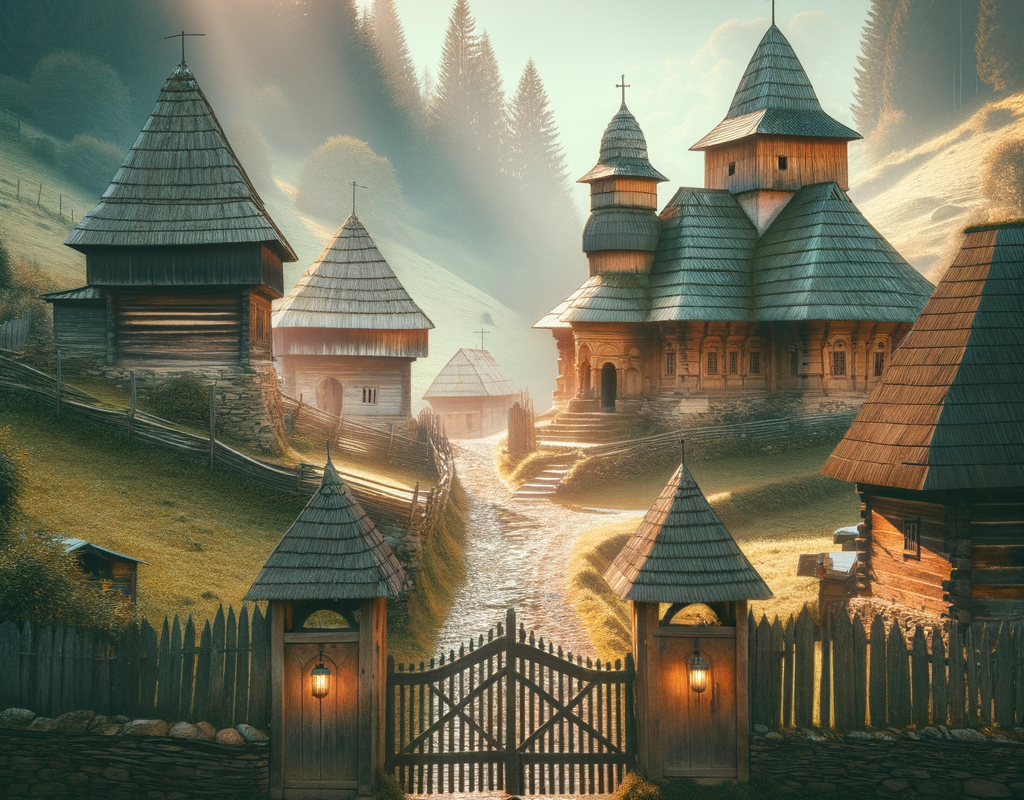
Introduction: Time-Travel in Northern Romania
Step into the living museum of Maramureș traditional villages, where towering wooden gates open onto hay meadows and Sunday folk dress still brightens village lanes. In this slow corner of northern Romania, time feels paused—in the best way. This guide shows you what makes the region unique, how to plan a respectful visit, and how to connect with people and places without rushing through them.
You’ll learn about wooden churches recognized by UNESCO, practical tips on transport and seasons, immersive experiences from craft workshops to farm-to-table suppers, and the etiquette that keeps traditions thriving.
Maramureș traditional villages at a glance
The wooden gates and carved stories
Massive oak gates—carved with sun wheels, rope motifs, and the “tree of life”—guard homesteads like open-air family crests. Craftspeople still use hand tools, and many will describe symbols’ meanings if you ask politely and with curiosity.
– Common motifs: protection (rope), fertility (wheat), continuity (tree of life)
– Where to notice details: gate lintels, well covers, and porch balustrades
UNESCO wooden churches
Dozens of wooden churches dot the region, and eight are listed by UNESCO for their slender spires and painted interiors. Many remain active parish centers—humble on the outside, intricately decorated within. Read more via the official source: UNESCO listing for the Wooden Churches of Maramureș.
> “These churches are not monuments in isolation—they’re part of a living spiritual landscape.”
Seasonal rhythms and folk customs
Life moves with the seasons: haymaking in summer, plum brandy distilling in autumn, caroling in winter, and Easter processions in spring. Sundays bring people in traditional dress to church; if invited for a meal afterward, accept with gratitude and modesty.
By the numbers
– About 44% of Romania’s population lives in rural areas (World Bank), underscoring how deeply village lifeways still matter across the country. Source: World Bank rural data for Romania
– Eight UNESCO-listed wooden churches, several within short drives of each other
– The scenic road `DN18` threads through mountain passes and ties many villages together
Planning your visit
When to go
– Spring (April–May): flowering orchards, lively Easter traditions, cool weather.
– Summer (June–August): haystacks dot the meadows; festivals and long daylight.
– Autumn (September–October): golden hills, harvest markets, milder crowds.
– Winter (December–February): carols, snow scenes, and cozy wooden interiors.
Tip: For festivals and open workshops, aim for late spring to early autumn. For Sunday dress and active church life, plan to be in a village on a Sunday morning.
Getting there and around
– Fly to Cluj-Napoca or Baia Mare; rent a car for flexibility. Public buses exist but are infrequent.
– Primary routes: `DN18` and `DN17C`. Mountain stretches can be slow—plan generous buffers.
– Local taxis and rides can be arranged by guesthouse hosts; ask in advance.
Actionable route idea: Base yourself near Sighetu Marmației for access to several UNESCO churches and nearby craft villages, then add a night deeper in the valleys for quiet walks and stargazing.
Where to stay: guesthouses and farmstays
Choose family-run pensiuni (guesthouses) to experience home cooking, orchard tastings, and stories around the stove. Ask about:
– Breakfasts with homemade cheese and jams
– Access to gardens or small workshops
– Laundry and heating in shoulder seasons
For deeper context on sacred architecture before you book, see this guide to the Wooden Churches of Maramureș.
What to pack and wear
– Modest clothing for churches (covered shoulders; knee-length or longer)
– Light scarf for women if attending services
– Waterproof shoes for meadow walks; layers for cool nights
– Small gifts from home (coffee, tea, or sweets) if invited to a family table
Micro-checklist for day trips
– Reusable water bottle
– Cash in small notes (some shops don’t take cards)
– Offline maps and church opening times
– A bag for any market purchases to reduce plastic
Immersive experiences
Hands-on craft workshops
Seek out woodcarving, weaving, or egg-painting workshops. Many artisans welcome visitors for short sessions; your participation fee supports skills transmission.
Case in point: A two-hour woodcarving introduction may include a symbol primer, hands-on carving, and tea with the artisan’s family. You’ll leave with a small piece and a deeper grasp of motifs you’ll spot on gates and churches.
Village markets and farm-to-table
Markets typically run in the morning. Taste smoked cheese, apples from backyard trees, or jars of plum jam. Ask about seasonal dishes like:
– Balmoș (shepherd’s cornmeal and cheese)
– Ciorbă (sour soup with garden vegetables)
– Fresh bread baked in wood-fired ovens
Best practice: If you’re offered a sip of local brandy (`horincă`), take a small taste and pace yourself—hospitality is heartfelt and generous.
Festivals and Sunday dress
Traditional outfits aren’t performances but heirlooms. If you photograph, do so respectfully:
– Ask permission with a smile and simple phrases
– Offer to share photos via messaging apps
– Avoid blocking church doors or processions
A 3-day slow travel itinerary (case study)
– Day 1: Arrive and settle into a guesthouse near Sighetu Marmației. Evening walk among hay meadows; dinner with local cheeses and garden salads.
– Day 2: Visit two UNESCO wooden churches in nearby villages. Lunch at a family-run place; afternoon weaving workshop. Sunset viewpoint over the valley.
– Day 3: Morning market visit; short hike to a ridge pasture. Afternoon gate-carving demonstration. Depart via `DN18`, stopping for photos at a pass.
Responsible travel and etiquette
Cultural dos and don’ts
– Do greet people you pass; a simple “Bună ziua” goes far.
– Do dress modestly for churches and cemeteries.
– Don’t enter private yards without invitation, even if the gate stands open.
– Don’t drone over services or private homes.
Supporting local economies
– Prioritize locally owned stays and eateries.
– Pay fair prices for handmade goods; haggling is rare and can be disrespectful.
– Book workshops directly with artisans when possible.
Photography and privacy
– Always ask before photographing people, especially elders and children.
– Inside churches, flash is typically prohibited; some parishes request no photos during services.
– Share prints or digital copies if you promised to—trust builds community.
Eco-friendly transport and waste
– Carpool with fellow travelers or schedule shared transfers.
– Carry out all trash from picnic spots.
– Refill bottles and avoid single-use plastics at markets.
Mistakes to avoid and best practices
Common mistakes
– Rushing through multiple villages in one day instead of lingering
– Wearing shorts or sleeveless tops to church services
– Assuming card payments are universal
– Treating homes or barns like open exhibits
Best practices for meaningful visits
– Plan one anchor activity per day (church visit or workshop), then allow unstructured time.
– Learn a few Romanian words: “mulțumesc” (thank you), “vă rog” (please).
– Offer to pay for spontaneous tours; many families resist tips but welcome donations to the church box.
Safety and health basics
– Country roads can be narrow with animal traffic; drive slowly.
– In meadows, check for ticks after hikes and carry basic repellent.
– Winters can be severe—confirm road conditions ahead.
Budget tips without cutting impact
– Travel in shoulder seasons for value and space.
– Share private transfers with other guests.
– Buy picnic supplies at markets but dine locally for at least one meal daily.
For broader planning beyond this region, our practical Romania countryside travel tips can help you choose routes and read rural road signs with confidence.
Conclusion: Keep traditions alive through thoughtful travel
The power of Maramureș traditional villages lies in everyday rhythms—church bells at dawn, hay carts at dusk, and the pride of craft passed hand to hand. With a little planning, you can witness UNESCO-listed wooden churches, share meals in family kitchens, and contribute to the continuity of a rare living heritage.
Start mapping your route, learn a few greetings, and choose one artisan or parish to support. How will you make your time in Maramureș traditional villages slower, kinder, and more meaningful?
FAQ
Q: How many UNESCO wooden churches are in Maramureș?
A: Eight churches are on the UNESCO World Heritage List, each with distinct architecture and paintings.
Q: Do I need a car to explore the villages?
A: It’s the easiest option. Buses exist but run infrequently; guesthouses can help with local transfers.
Q: What should I wear to visit churches?
A: Modest clothing—covered shoulders and knees. A light scarf is useful for women.
Q: Can I photograph people in folk dress?
A: Ask first, avoid flash near services, and offer to share the photo afterward.