Introduction
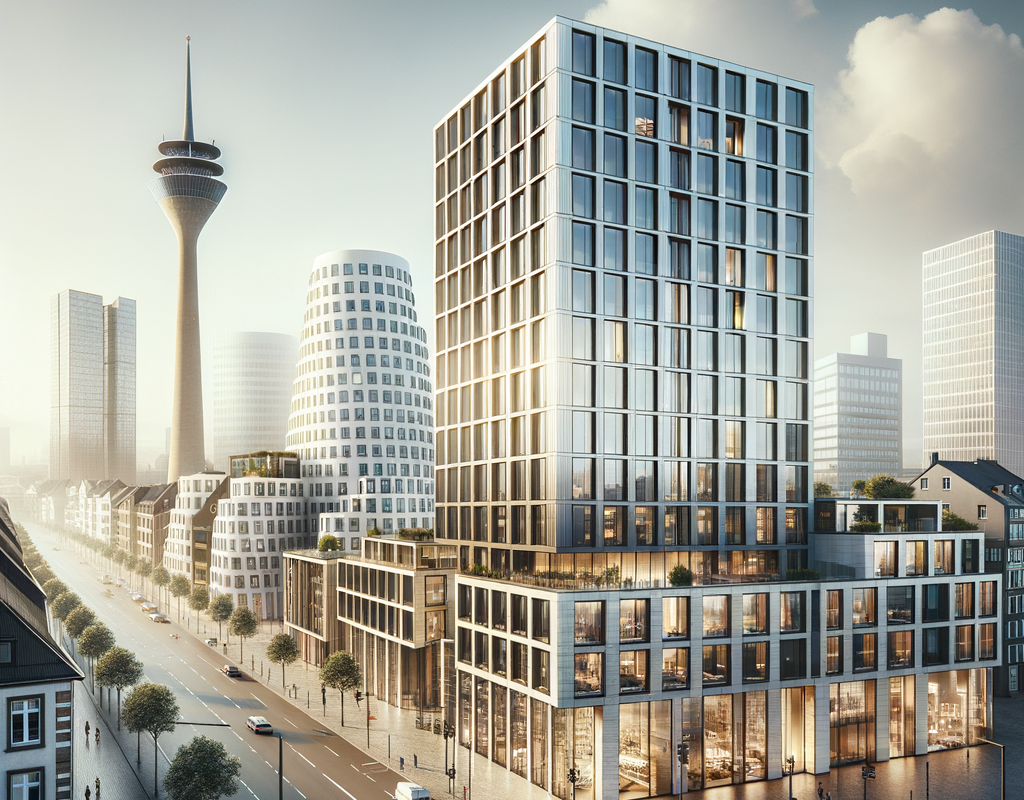
If clean lines, daring silhouettes, and innovative materials excite you, modern architecture in Düsseldorf will deliver. This riverside city fuses avant‑garde design with everyday life—from Frank Gehry’s gleaming curves in the MedienHafen to the Rhine Tower’s panoramic views and the green-clad Kö-Bogen complex. In this guide, you’ll get a smart route, practical photo strategies, insider context, and tips to avoid common pitfalls, all crafted for design lovers who want substance as well as style.
Modern Architecture in Düsseldorf at a Glance
Why Düsseldorf became a design hotspot
Post‑industrial renewal along the Rhine gave architects room to experiment. The result is a compact cluster of standout buildings you can cover in a single day without rushing.
Three icons to anchor your visit
– Gehry’s trio at Neuer Zollhof (1999) reframes the harbor skyline with stainless steel, white plaster, and red brick volumes.
– The Rhine Tower (240.5 m; observation deck at about 168 m) offers city‑wide context and bold engineering.
– Kö-Bogen I (Daniel Libeskind, 2013) and Kö-Bogen II (ingenhoven associates, 2020) merge retail, public space, and living green façades.
Credible sources for deeper reading
– See the city’s overview via the official Visit Düsseldorf pages on the Gehry Buildings and Rheinturm for dates and access details.
– For Kö-Bogen II’s sustainability data, review ingenhoven associates’ project profile.
> Good itineraries balance icons with time to observe materials, light, and human flow. Prioritize fewer sites—and see them better.
MedienHafen Masterclass: Gehry and Beyond
Case study: Neuer Zollhof’s sculptural trio
Frank Gehry’s Neuer Zollhof uses three contrasting volumes to create dynamic perspectives as you move. The reflective tower multiplies sky and water; the brick block grounds the ensemble with industrial memory; the white plaster element introduces crisp voids and shadow play. Completed in 1999, the complex anchored the harbor’s transformation and still sets the tone today.
Photo spots, timings, and angles
– Best time: golden hour and blue hour. Water reflections intensify, and metal cladding loses midday glare.
– Vantage points: walk the quay around Speditionsstraße for shifting alignments; step back to the pedestrian bridge for wide shots pairing the ensemble with cranes and docks.
– Lenses: a 24–70 mm suits façades and context; a 16–35 mm captures Gehry’s curves up close without excessive distortion.
Common mistakes to avoid
– Midday only: harsh sun flattens stainless steel. Plan at least one low‑light session.
– Staying static: Gehry’s forms reward movement. Circle each building to watch the façades “morph.”
– Ignoring neighbors: Don’t miss Will Alsop’s Colorium, whose pixelated skin contrasts Gehry’s materiality and adds context to the harbor’s design dialogue.
Best practices on site
– Compose with leading lines from rails and bollards to add depth.
– Look for human scale—cyclists or dock workers—to emphasize massing.
– Note technical details like `double-curvature` panels and junctions; they reveal build quality and intent.
Sky-High Perspectives at the Rhine Tower
What the numbers say
At 240.5 meters, the Rhine Tower (Rheinturm, completed 1981) anchors Düsseldorf’s skyline. The observation deck sits around 168 meters, offering 360‑degree views across the old town, MedienHafen, and Hofgarten. Its illuminated `Lichtzeitpegel` light sculpture by Horst H. Baumann displays time along the shaft—an engineering‑meets‑art flourish recognized citywide.
Practical visit tips
– Go twice if you can: daytime for urban morphology; dusk for the city’s neon and river glow.
– Weekdays are quieter. On weekends, buy timed tickets to reduce queuing.
– For stability, brace your camera against the structure; long exposures through glass need a lens hood to minimize reflections.
Safety and accessibility
The tower follows rigorous German safety standards, with elevators and accessibility options. Check the official site for current opening hours and any maintenance closures.
Mistakes to avoid
– Overexposing the river. Use exposure compensation to keep highlight detail.
– Forgetting reflections. Carry a small black cloth to block window glare when shooting at night.
Kö-Bogen and Kö-Bogen II: Green Urban Icons
Design story and authorship
Kö-Bogen I by Daniel Libeskind (2013) slices limestone façades with diagonal cuts that frame views toward the Hofgarten, blending retail with promenade space. Kö-Bogen II by ingenhoven associates (2020) completes the ensemble across the boulevard, redefining sustainability as a design driver rather than an add‑on.
Europe’s largest green façade
Kö-Bogen II integrates more than 30,000 hornbeam plants arranged in over 8 kilometers of hedges, creating what is often cited as Europe’s largest green façade. The living skin reduces urban heat, dampens noise, and seasons the square with shifting textures—an everyday, tangible climate solution in the city center.
Shopping, public realm, and user experience
– Wide steps and terraces invite lingering, not just transacting.
– The arcades offer weather‑protected views toward the Hofgarten’s canopy.
– Interiors prioritize daylight, wayfinding clarity, and flexible retail footprints that adapt over time.
Actionable tips
– Photograph the green façade from across the water to capture its full sweep.
– Visit after light rain—the hedges saturate in color and the stone reads crisply.
– Compare Kö-Bogen I’s angular cuts with Kö-Bogen II’s organic massing to see two sustainability narratives in dialogue.
Plan Your Modern Architecture Trail
A one-day route that flows
1) Start at MedienHafen (Gehry, Colorium).
2) Walk the Rhine promenade north toward the tower.
3) Ride up the Rhine Tower for context.
4) Continue to Königsallee and Hofgarten for Kö-Bogen I & II.
For a deeper walk, this Rhine promenade walking guide covers viewpoints along the river.
Transit and timing
– Rheinbahn trams and the U‑Bahn knit these sites together. “Landtag/Kniebrücke” is handy for the tower; “Heinrich‑Heine‑Allee” serves Kö-Bogen.
– Start early at MedienHafen, break midday, and return at dusk for second‑look images.
Budget and logistics
– The tower is the only paid site on this list; everything else is public realm.
– Pack light: one zoom, one wide prime, microfiber cloth, and a compact tripod (where permitted).
– For a curated day, see our Düsseldorf itinerary for design lovers.
Conclusion
Düsseldorf proves that good design is a lived experience, not a museum piece. From the sculptural play of Gehry’s harbor trio to the Rhine Tower’s citywide vantage and the climate‑conscious ambition of Kö-Bogen, the city rewards close looking and smart planning. Ready to map your own path through modern architecture in Düsseldorf? Set your route, charge your batteries, and see how the river’s light transforms each façade—then share which space surprised you most.
FAQ
Q: What’s the best time to photograph MedienHafen?
A: Golden hour and blue hour for balanced reflections and softer highlights.
Q: Do I need a ticket for the Rhine Tower?
A: Yes. Timed tickets help avoid queues, especially at sunset.
Q: Are Kö-Bogen stores open on Sundays?
A: Most retail in Germany is closed Sundays; public spaces remain accessible.
Q: Can I join a guided architecture tour?
A: Yes. Local operators and the tourist office offer themed architecture walks.
Q: Is tripodding allowed at the tower?
A: Policies vary. Small tripods are sometimes restricted; check onsite rules.