Introduction
Step through a revolving door, hear porcelain clink, and feel time slow—that is the magic of Viennese coffee house culture. Recognized by UNESCO in Austria’s national inventory of intangible heritage, it’s more than coffee: it’s ritual, conversation, and civility. In this guide, you’ll learn what UNESCO honored, how to order classics like a Melange or an Einspänner, which cakes are essential (hello, Sachertorte and Apfelstrudel), and how to savor the unhurried atmosphere at icons such as Café Central and Café Sacher.
Why UNESCO Recognized Viennese Coffee House Culture
The 2011 inscription and what it means
In 2011, the Austrian Commission for UNESCO inscribed Viennese coffee house culture on Austria’s national inventory of intangible cultural heritage. The listing honors living traditions—customs and knowledge passed down across generations—not buildings or brands. It recognizes the café as a social institution where reading, debating, composing, and simply being are protected rituals.
> “A coffeehouse is a place where time and space are consumed, but only the coffee is found on the bill.”
For centuries, cafés have been Vienna’s “public living rooms,” playgrounds for thinkers and everyday life alike.
Time as an ingredient
Unlike quick-service cafés elsewhere, Vienna’s houses build slowness into the experience. You order once, and a silver tray arrives with your drink and a glass of water. The water signals welcome and time: linger to read, write, or people-watch without pressure. Many locals will spend an hour or more over a single cup.
Scope and endurance
From grand Ringstrasse institutions to neighborhood Kaffeehäuser, the city offers hundreds of cafés with marble tables and bentwood chairs. Prices are transparent—expect around €4–€7 for most coffees and €5–€9 for a slice of cake—yet the real value is the space to stay. The model has survived wars, trends, and the rise of espresso bars precisely because it centers culture as much as commerce.
For the official overview, see the Austrian Commission for UNESCO’s entry on Vienna’s coffeehouse tradition.
Classic Drinks: From Melange to Einspänner
The Melange, Vienna’s signature cup
The quintessential order is the Melange: half coffee, half steamed milk, topped with light foam. Think of it as Vienna’s cousin to the cappuccino, but gentler and meant for lingering. Pair it with a morning newspaper and a quiet corner seat. Best practice: ask for a “Wiener Melange” if you want the classic balance.
– Flavor profile: smooth, rounded, mild acidity
– Ideal pairings: Apfelstrudel, Topfenstrudel, or a buttery Kipferl
– Mistake to avoid: Expecting latte art—Vienna values substance over flourish
The Einspänner ritual
Served in a tall glass with a generous crown of whipped cream, the Einspänner keeps the coffee hot beneath its insulating layer. It’s theatrical and practical, historically favored by coachmen who needed one hand for the reins. Sip the coffee through the cream; don’t stir unless you like sweetness throughout.
– Best time: mid-afternoon treat
– Ideal pairing: Sachertorte or a nutty Esterházy slice
– Tip: If you prefer unsweetened cream, politely request “ohne Zucker”
Other staples to order like a local
Vienna’s menu is its own language. A few essentials:
– `Verlängerter`: an espresso “extended” with hot water (akin to an Americano)
– `Kleiner Schwarzer`: a single espresso
– `Großer Brauner`: a double espresso with a side of milk or cream
– `Pharisäer`: coffee with rum and whipped cream (less common but still found)
Actionable tip: When unsure, ask staff for a suggestion based on strength and milk preference. Service is formal yet helpful.
Case study: Choosing the right drink
A traveler with a sweet tooth visiting in winter might start with an Einspänner and Sachertorte. The whipped cream softens the cake’s dense chocolate and preserves heat on a cold day. In spring, a Melange with Apfelstrudel lets delicate apple and cinnamon shine without overpowering acidity.
Cakes and Sweet Traditions
Sachertorte: a chocolate icon with a storied rivalry
Sachertorte is a dense chocolate sponge layered with apricot preserve, sealed with glossy chocolate icing. At Café Sacher, the Original Sachertorte is served with unsweetened whipped cream—a contrast that highlights the cake’s richness. The famed “cake wars” between Hotel Sacher and Demel over naming rights shaped the dessert’s legend; today each version has loyal fans.
Best practices:
– Eat Sachertorte at room temperature to enjoy the full aroma.
– Pair with a Melange or a `Großer Brauner` to balance sweetness.
Apfelstrudel: layers of craft
Apfelstrudel is all about texture: paper-thin dough wrapped around tart apples, raisins, and spice. A dusting of powdered sugar and sometimes a vanilla custard sauce complete the picture. Ask whether it’s baked in-house; many cafés proudly make their own dough.
– Ideal drinks: Melange or Verlängerter
– Tip: If you dislike raisins, specify “ohne Rosinen” when ordering
Seasonal and regional favorites
Vienna’s pastry cases change with the calendar. Look for:
– Topfenstrudel (quark cheese strudel) in cooler months
– Kardinalsschnitte with meringue and cream for light afternoons
– Gugelhupf for a classic, not-too-sweet slice
Actionable strategy: Visit earlier in the day for the best selection; popular cakes can sell out by late afternoon.
Pairing strategies (with examples)
– Rich cakes (Sachertorte, Dobostorte): pair with black coffee (`Kleiner Schwarzer`) or `Großer Brauner`
– Fruity or creamy pastries (Apfelstrudel, Kardinalsschnitte): pair with a Melange
– Nut-forward cakes (Linzer, Esterházy): pair with a Verlängerter or Einspänner
The Atmosphere: Time, Service, and Space
Café Central: grand, literary, and theatrical
Housed in a neo-Gothic palace, Café Central has vaulted ceilings and a history of writers and thinkers. Expect a queue at peak times; the wait is part of the ritual. Live piano on some evenings complements the scene without rushing it. Practical note: staff will not hurry you; one coffee and a cake can sustain a lengthy conversation.
– Case study: A 90-minute afternoon with an Einspänner and Esterházy slice affords time to read and journal, with a refill of water arriving unprompted.
Café Sacher: ritual and the original cake
Adjacent to the State Opera, Café Sacher is polished and precise. Many guests come specifically for the Original Sachertorte, served with unsweetened cream. The service is professional, the pace measured, and the silver tray ceremony—coffee plus water—feels ceremonious.
– Tip: Reservations help at busy hours; ask for a quiet table if you plan to linger.
Design details that define the genre
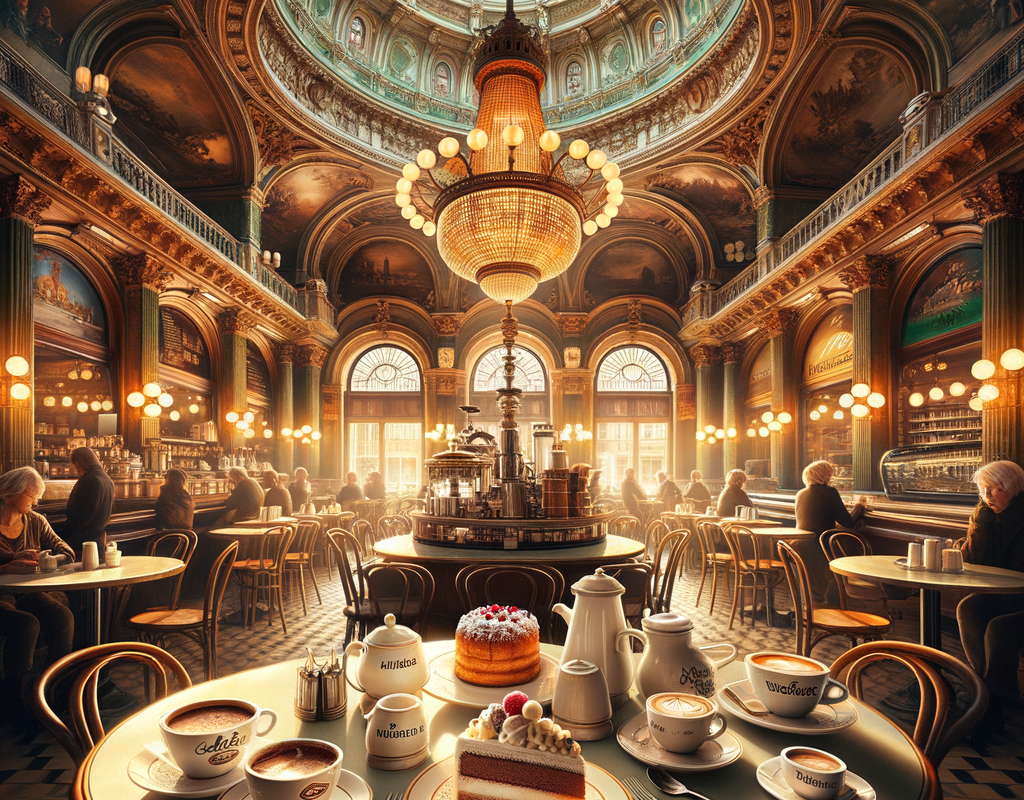
Look for marble-topped tables, Thonet bentwood chairs, coat stands, brass fixtures, and glass display cases. Newspaper racks with broadsheets are common. Lighting is warm, never harsh; acoustics prioritize conversation.
– Mistake to avoid: Treating the space like a co-working hub. Laptops are tolerated in some cafés but discouraged in the grand houses.
Etiquette and pacing
– Seat yourself where indicated; in famed cafés, staff will guide you.
– Order once; your table is yours until you leave.
– Tipping is customary: round up by about 5–10%.
– Payment is often at the table; cash is still widely appreciated.
For more practical nuance, see our guide to European café etiquette basics.
Planning Your Visit: Best Practices and Mistakes to Avoid
When to go (and how long to stay)
– Morning (8:00–10:30): easiest for peaceful reading and fresh pastries.
– Mid-afternoon (14:30–17:00): prime cake time, busier but atmospheric.
– Late evening: quieter; great for a digestif or final coffee.
You can comfortably stay an hour or more on a single order in most traditional houses.
Budgeting and ordering smart
– Expect around €10–€15 for a coffee-and-cake combo in grand cafés.
– Water is included with coffee; refills are graciously offered.
– No free coffee refills—order a second cup if you want more.
Strategy: If you enjoy variety, share two cakes between two people rather than committing to one large slice each.
Common mistakes to avoid
– Ordering “a latte” and being surprised. Ask for a Melange or `Caffè Latte` explicitly.
– Rushing the staff. Service is attentive but never hurried by design.
– Skipping reservations at peak times for Café Central or Café Sacher.
– Expecting Wi‑Fi everywhere. Many houses minimize digital distractions.
– Not checking the pastry case first; daily specials may not be on the menu.
Sample half-day itinerary
– 10:00 Café Central: Melange + Apfelstrudel; read for an hour.
– Walk the Ringstrasse or visit the Hofburg.
– 15:30 Café Sacher: Einspänner + Original Sachertorte; linger and people-watch.
Hungry for more sweets? Explore our in-depth guide to Viennese desserts and pastries.
Conclusion
Viennese coffee house culture turns a cup of coffee into a civic ritual—where conversation is valued, time slows, and cakes are treated with the respect they deserve. From the silky Melange to the cream-topped Einspänner, from Sachertorte to Apfelstrudel, the experience rewards curiosity and patience. Plan a visit to Café Central or Café Sacher, order thoughtfully, and make space to linger. If this overview inspired you, start mapping your own route through Viennese coffee house culture and share which café you’d choose first—what will be in your cup?
FAQ
Q: What did UNESCO recognize exactly?
A: In 2011, the Austrian Commission for UNESCO inscribed Vienna’s coffeehouse tradition on Austria’s national intangible cultural heritage inventory.
Q: How long can I stay after ordering?
A: As long as you like. One coffee and a cake can comfortably sustain a visit of an hour or more.
Q: What should I order first?
A: Start with a Melange and Apfelstrudel to taste the classic pairing, then try an Einspänner with Sachertorte.
Q: Do I need a reservation?
A: For Café Central and Café Sacher at peak times, yes. Otherwise, walk-ins are common.
Q: Is tipping expected?
A: Yes. Round up or add 5–10% and tell the server the total when paying at the table.